Loading case study…
A Binge-Worthy Content Strategy That Also Influences Pipeline

Elle GrossenbacherOctober 24, 2026
Founder at Dusted
Views (8)
Show summary
- Twilio’s cellular connectivity demand plateaued during COVID-19, while customer interviews revealed businesses redesigning models to address urgent pandemic-exposed problems and innovate.
- Twilio needed to restart stalled marketing-generated pipeline, targeting product managers through effective channels and restoring cellular connectivity’s 30% share of quarterly pipeline.
- Twilio created a monthly, customer-centric webinar series showcasing pandemic-driven IoT solutions across healthcare, tracking, contact tracing, and vaccine monitoring, distributed through targeted industry publications.
- Zoom delivered live and on-demand webinars, while Marketo managed invitations, registrations, and engagement tracking; landing pages, publication partnerships, and sales follow-up supported conversion.
- The series initially generated limited pipeline, but repeated viewing revealed deep engagement; nurturing those leads eventually helped the broader program reach the 30% benchmark.
The context
I was a principal product marketing manager at Twilio, responsible for the company’s cellular connectivity product offering. We sold to product managers building cellular-connected products—everything from vehicle and asset-tracking systems to livestock monitoring. In early 2020, the COVID-19 pandemic forced businesses to shut down or pause operations, and our business hit an immediate plateau. I was asked to research how we could seize the moment rather than simply wait for demand to return.
I interviewed a range of Twilio customers and found that many were rapidly changing their business models, often in ways that addressed urgent problems created or exposed by the pandemic. I also looked at previous major disruptions, including recessions and world wars, and saw a recurring pattern: periods of crisis were often followed by rapid innovation. The signal was clear enough to investigate further—our customers were not standing still; they were redesigning their businesses to emerge from the pandemic.
The challenge
Twilio needed a campaign that could restart marketing-generated pipeline after COVID-19 caused it to go flat. My responsibility was to turn the customer research into the campaign strategy, messaging, content, and any sales enablement the sales team needed to use it. The hardest constraint was distribution: after establishing the narrative, I still had to identify the channels where our product managers and other ICP members were actually spending time during the disruption.
Success meant more than engagement. I needed the campaign to create qualified opportunities and rebuild pipeline volume for the cellular connectivity product line. That line was responsible for 30% of the broader product’s quarterly pipeline target, so restoring that share was the benchmark I was working toward. Prospect engagement would be an early signal, but the real test was whether the campaign could move the business out of its COVID-era plateau.
The approach
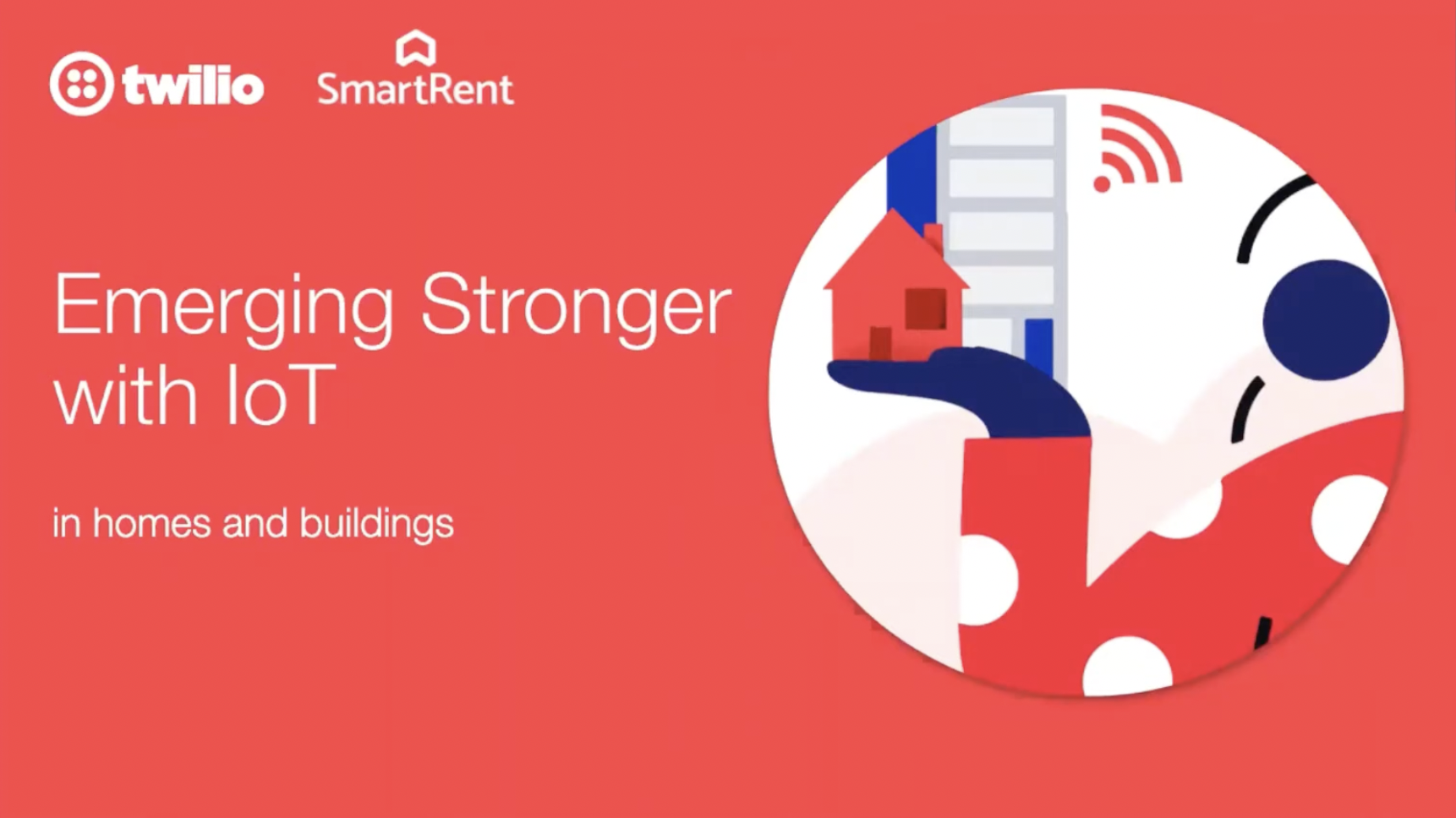
The research showed that customers were not waiting passively for the pandemic to end; they were redesigning their businesses around urgent, industry-specific problems. Rather than make Twilio’s product the main story, I created a repeatable webinar series called “Emerging Stronger with the Internet of Things,” with each session featuring a different customer and use case from our go-to-market strategy.

The tools
The campaign depended on a small set of tools that mapped directly to the customer journey. I used Zoom to run the live webinars, bring customers into the conversation, handle audience questions, and make the sessions available for on-demand viewing. I used Marketo to manage campaign operations for the IoT segment, including email invitations, registration flows, and engagement tracking.
I paired those with dedicated landing pages for the overall series and each webinar, then extended distribution through publication partnerships and social promotion. Sales enablement materials and BDR follow-up helped turn interest into conversations rather than leaving the webinars as standalone content. The campaign brief also gave the team a practical operating model, including a planned cost per lead of about $28.
This was a pre-AI campaign, so I did not use AI tools. If I ran it again, I would use Claude or Codex to create an automated content workflow: take the live recordings, produce transcripts and derivative content, and turn the strongest conversations into a podcast series. Zoom and Marketo were the most important tools because they connected the repeatable event format to measurable campaign engagement; the biggest improvement I would make is automating more of the content repurposing.
The result
The campaign did not immediately restore the cellular connectivity product line to its 30% share of the quarterly pipeline target. We initially treated it as a demand-generation campaign, but the results showed that it was better suited to the middle of the funnel: it took several quarters for the campaign to contribute more than 10% of the quarterly target.
The strongest early signal was behavioral.
Prospects did not just attend one webinar and disappear; some watched five webinars in a single day. That pattern showed that the series was creating sustained interest in the problems and use cases, even when it was not producing immediate opportunities. We fed the leads into additional nurture campaigns, which eventually helped the broader program reach the 30% pipeline benchmark. The key learning was to judge customer-centric content not only by immediate pipeline, but also by the depth of engagement it creates and the role it can play in a longer nurture journey.
Like this approach?
Discover how this approach could help you reach your professional goals.
or share this case study with your network
Author
Elle GrossenbacherOctober 24, 2026
Founder at Dusted
Views (8)
Discover more on Dusted

Pallavi Shrivastava1d ago
Head of Product Marekting at Banking
Finance & Banking
The SIGNAL Framework: Turning Field Noise into Sales Impact
Pallavi set out to help product marketing teams turn scattered customer feedback into measurable sales and adoption gains. She introduced SIGNAL, a continuous cycle for collecting insights, identifying patterns, prioriti Read more
0
Views (17)


Comments
No comments yet. Be the first to share what you think.