Loading case study…
Scaling Payment Adoption from 60% to 98% GDV at GoFundMe Pro
Keith BlazekJuly 24, 2026
Product Marketing & GTM Leader in Technology & Software
Views (24)
Show summary
- At Classy, now GoFundMe Pro, Classy Pay processed 60% of gross donation volume while the company prepared for rapid growth and major product expansion.
- The goal was to increase Classy Pay adoption to 85% and eventually 100% despite contract changes, pricing objections, complex payment migrations, and a limited marketing foundation.
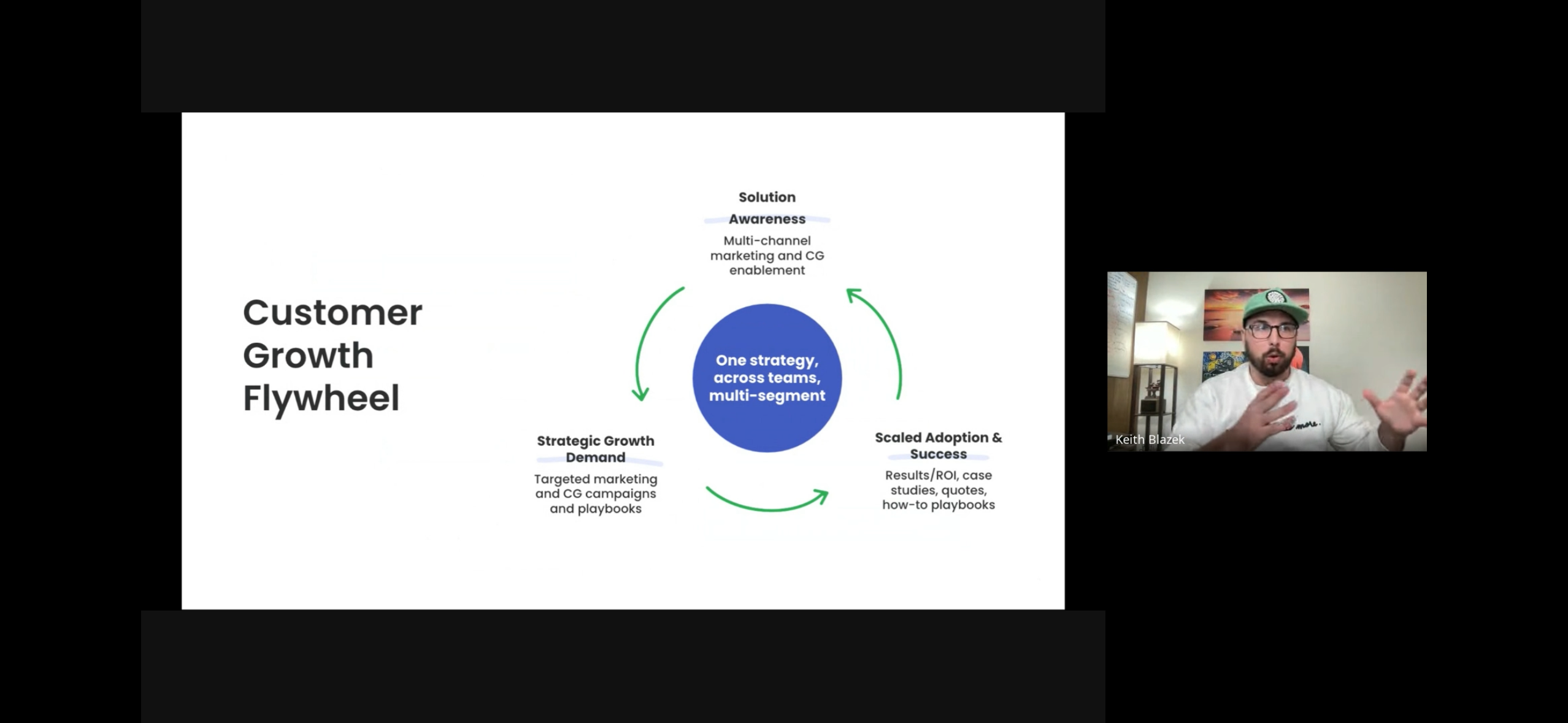
- I built an always-on, segmented adoption engine that identified stalled activations and used targeted messaging, lifecycle programs, in-product prompts, post-sales playbooks, and value-realization efforts to move customers from commitment to activation and expansion.
- Marketo Engage, Gainsight CS, Salesforce Sales Cloud, and Pendo connected campaign execution, post-sales workflows, adoption dashboards, account prioritization, and contextual in-product engagement.
- Classy Pay grew from 60% to 88% of GDV by year-end giving season and exceeded 98% within 12 months, generating more than $1 million in ARR, millions in annual transaction fees, and a reusable company-wide adoption model.
The context
When I joined Classy (now GoFundMe Pro, GoFundMe’s B2B nonprofit software business) as its first customer marketing hire, the company was at an inflection point. In my first two weeks, we closed our Series D funding, the founder stepped down and named the new CEO, and we were about to double the product and engineering team and ship 30+ new products and features over the next few years.
I was responsible for building demand generation for the customer base, driving upgrades and expansion for the new post-sales team, and leading product marketing and adoption for existing customers. Our customers were U.S. based nonprofits, with the largest opportunities concentrated in the mid-market and enterprise segments and their multi-person buying committees.
Classy Pay—the company’s payment product and strategic foundation for future innovation—processed about 60% of gross donation volume (GDV); the other 40% ran through multiple processors. Meanwhile, we were about to launch a suite of new payment options, recurring frequencies, and reporting features, and annual nonprofit donation volume would grow from $1 billion to $2.6 billion in my tenure.
Getting customers onto Classy Pay was the moment that mattered: without broad adoption, the next phase of product growth would be harder to unlock.
The challenge
The company’s objective was to make Classy Pay the default payment solution for the customer base: the fiscal-year target was 85% of gross donation volume (GDV), with a longer-term goal of 100% adoption.
My objective was broader than promoting a feature. I owned the product marketing and customer marketing strategy end to end—value propositions, audience segmentation, messaging, landing pages, email and in-product programs, post-sales playbooks, and the adoption funnel—while being accountable for customer growth, upgrades, expansion, and retention.
The biggest constraint: This was a full migration, not just an adoption campaign. It was equal parts product marketing, B2B sales, and customer adoption.
Customers had to accept contract changes, new pricing and transaction fees, and the operational challenge of moving payment processing inside complex B2B finance and reporting workflows. I also inherited the initiative in my first two weeks, from a previous PMM, with an unfinished product-marketing foundation just as the company was launching a new website, brand, and marketing automation platform.
Share this case study
Spread the word and give this marketer’s work the audience it deserves.
Share this case study with your network


Comments
No comments yet. Be the first to share what you think.