Loading case study…
Director of Growth & AI Transformation at Daybreak Health

“I’m not sure that B2B2C will work for our business,” our CEO remarked shortly after I joined a Series B startup as its solo product marketer.
The team had spent two years trying to make the channel drive revenue, so I understood why he was ready to give up.
In B2B2C marketing, winning over your buyer is just the beginning. You still need to turn that enthusiasm into distribution and give consumers a reason to act. That requires understanding what each audience values and what makes participation difficult.
Removing the education offering risked weakening a benefit valued by buyer accounts that collectively generated millions in contract revenue. Yet the existing format wasn’t driving the consumer engagement the business needed.
How could we rethink our approach, beyond conventional tactics, to meet consumers where they were while making it easier for our customers to participate?
My bet was to approach the marketing itself as a useful product: an ongoing education offering that buyers could readily share and consumers could use on their own terms, with a clear next step toward support, our conversion event.
The work had to serve three business goals: preserve customer value, grow consumer demand, and make delivery sustainable without a large new investment.
The original program helped establish a growing channel with value for buyers, consumers, and the business.
Discover how this approach could help you reach your professional goals.
or share this case study with your network
Director of Growth & AI Transformation at Daybreak Health
Fractional Marketing Consultant
Bonnie developed a three-year GTM roadmap for Pulsara, focusing on heart-failure deterioration prediction among regional health systems. They designed conversion-focused pilots, evidence-based milestones, and staged team Read more
At a health tech company, we offered family education webinars as a benefit included in customer contracts and a way to generate demand for teletherapy. Our buyers, school districts, valued the offering but had competing priorities. Our consumers, parents juggling work and family demands, were difficult to reach.
Participation was low, and the cost of paid webinar hosts was becoming hard to justify.
Still, I saw two things worth preserving: a benefit buyers valued and an opportunity to reach consumers through relationships they already trusted.
Investigate → Ideate → Align → Create → Measure → Iterate → Scale
I approached the marketing itself as an offering buyers would find valuable and easy to share, and consumers would find useful and worth acting on.
Starting with customer research, I repositioned existing content, tested the idea with a simple toolkit, and partnered with Customer Success to drive adoption.
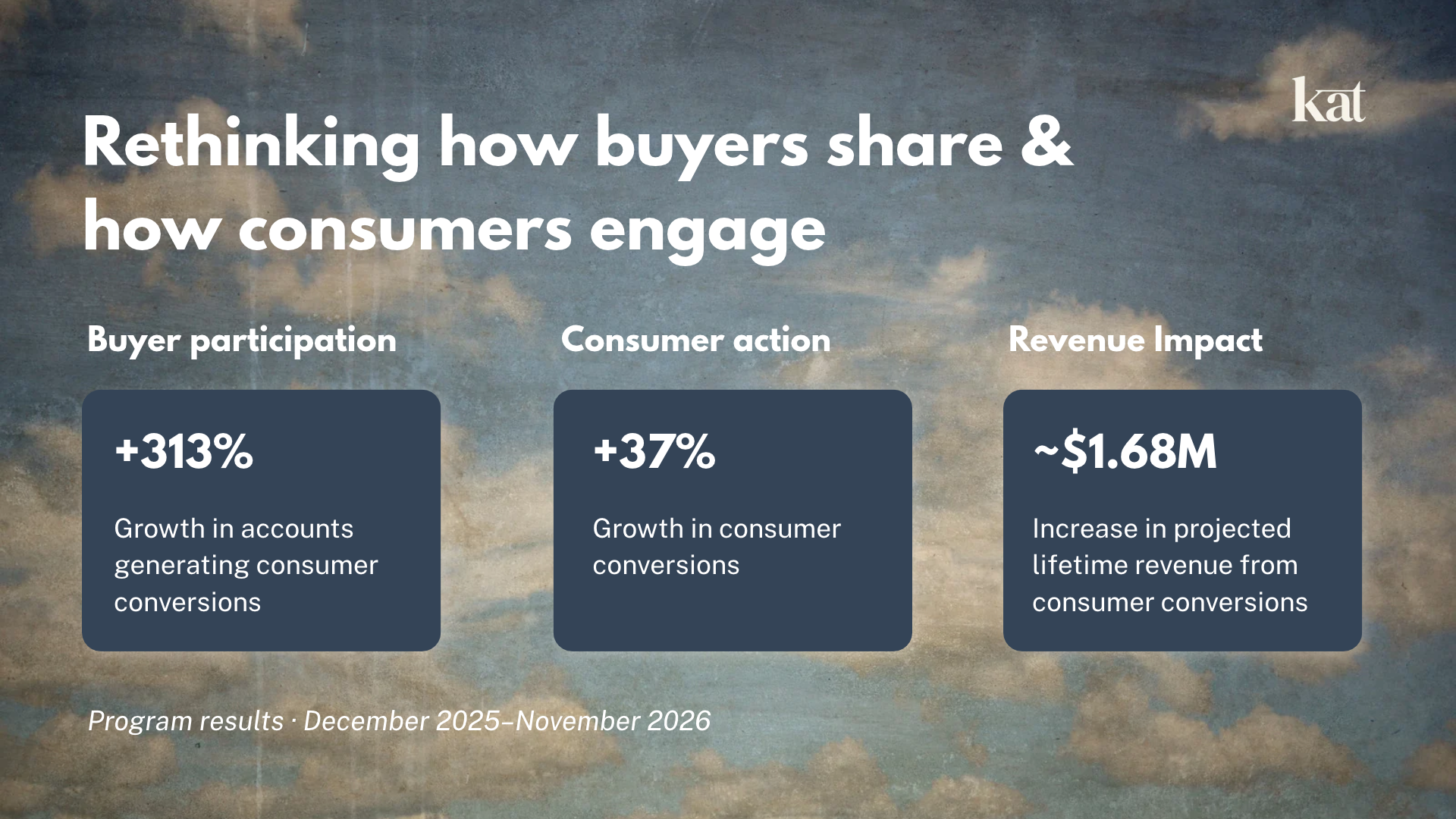
The program helped grow buyer accounts generating consumer requests by 313%, with consumer requests up 37% year over year, giving us the evidence to invest in the next iteration: a self-serve web app I designed and built with Claude Code (more on that later).
Check out the full app: https://toolkit.daybreakhealth.com/parent-education/unlimited/december-2026
I reviewed the existing offering, engagement and referral data, and worked with Customer Success on customer research and district feedback.
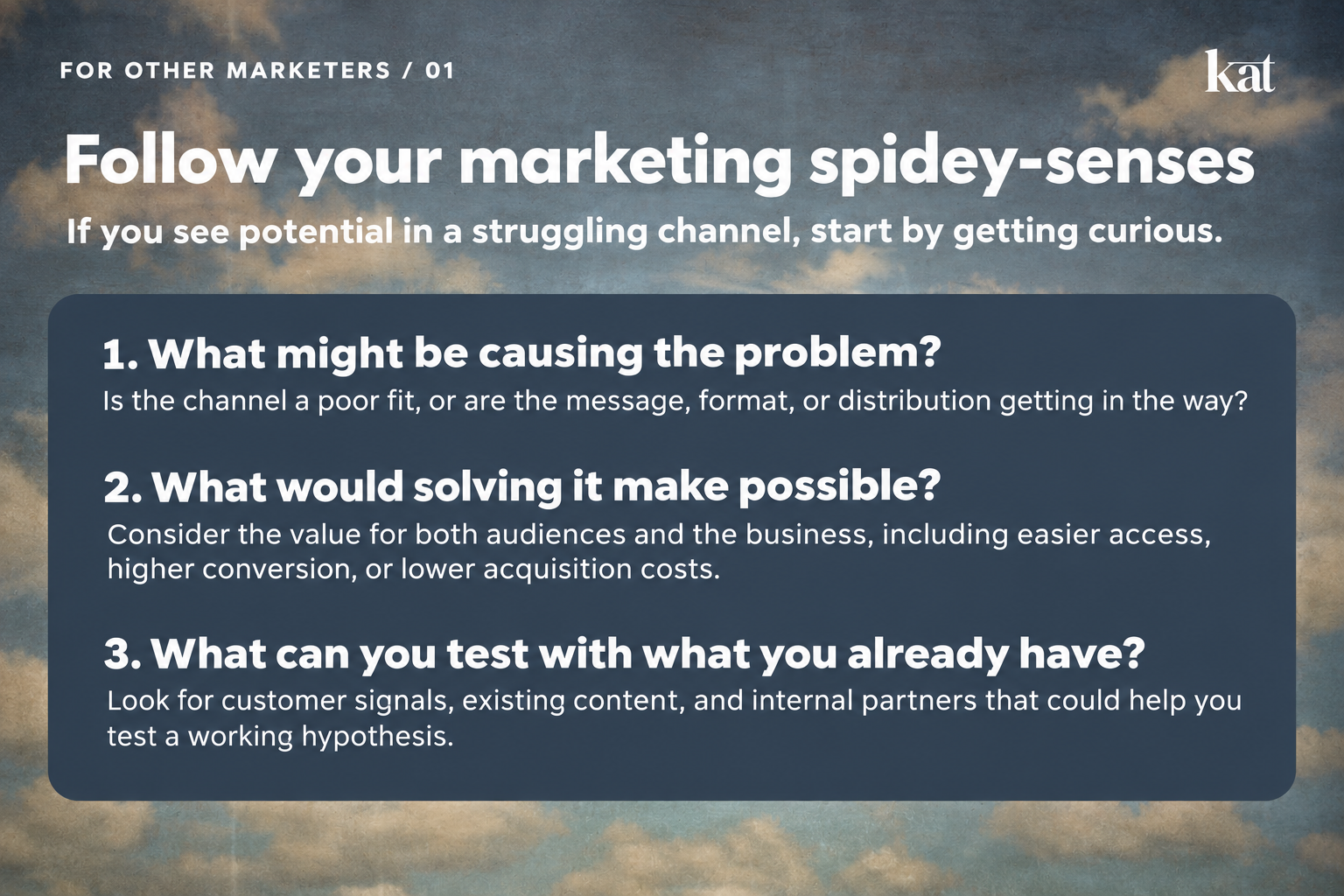
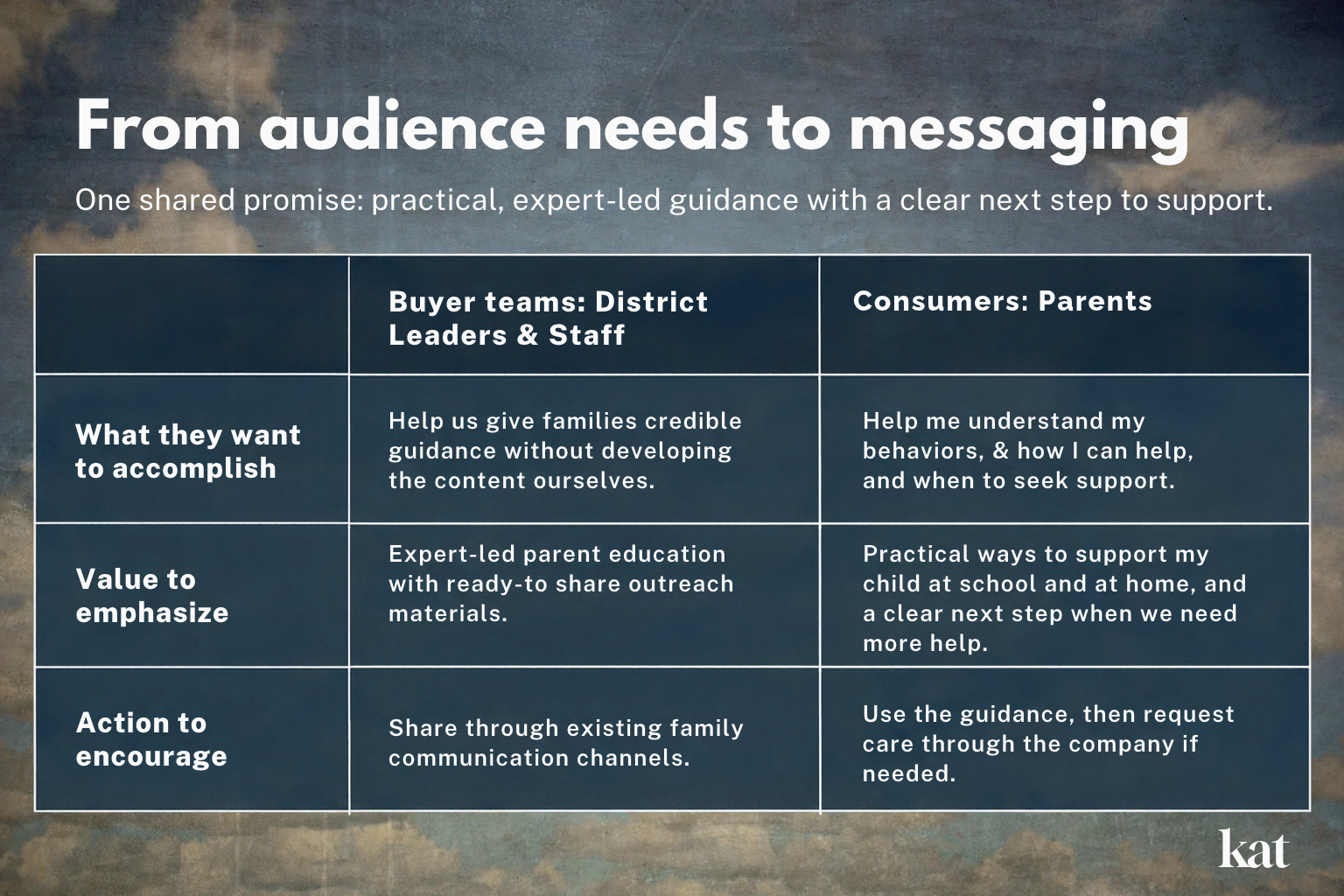
The buyers’ enthusiasm and low consumer attendance were signals to investigate. Staff needed useful resources they could distribute through existing communication channels without preparing materials themselves. For parents, I wanted to test whether shorter, practical guidance available on their own time would make participation more appealing.
That shaped my hypothesis: preserve the educational value while reducing the work required to share and consume it.

I shifted the value proposition from access to scheduled parent webinars to an ongoing education offering in a bite-sized format: practical guidance consumers could get on their own time, packaged so customers could readily distribute it.
For buyers, this was an improved way to deliver a benefit they already valued. For consumers, the entry point was a recognizable problem they wanted help solving.
The positioning and messaging shaped what I built for the subsequent experiments.

I adapted the offering for three contract types and English and Spanish, so cost, access, and language supported the promise.
Requests for care were the consumer conversion event; revenue followed when care began.
I up-cycled one recorded webinar into a short video, a practical one-pager, and ready-to-share outreach messages. I wrote the copy, edited the video in Descript, designed the assets in Canva, and organized the experience on a Notion AI toolkit page.
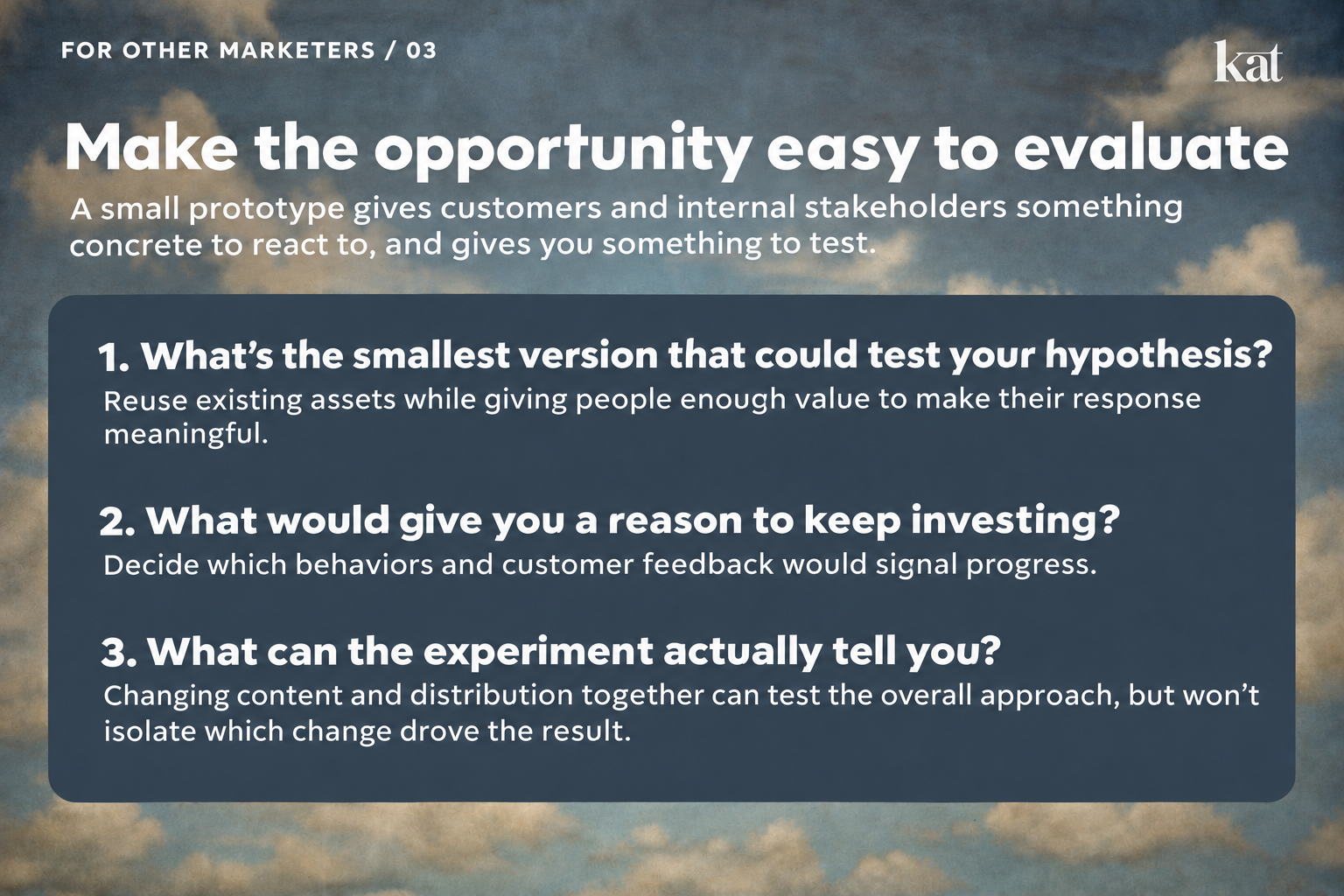
The toolkit gave customers something they could put to use and parents a way to get guidance without attending a scheduled event. It also gave internal stakeholders something concrete to evaluate.
Then I sent our CEO the first toolkit and my plan for a low-cost experiment. With prototyping becoming easier with AI, my message sounded something like "I did a thing...can we test it before throwing in the towel on our B2B2C channel ?" He was on board.
Next, I partnered with User Growth on distribution and Customer Success on feedback.
During the initial rollout, average weekly parent referrals rose 47% from November to January. We had changed the experience and distribution together, so we couldn’t isolate their individual effects. The initial results and customer feedback gave us a reason to keep investing.

After a brief “stand up and dance at work” moment, I realized the work was just beginning. A useful offering still needed customers to adopt and distribute it.
I teamed up with an Account Manager to introduce the program in a webinar to buyers, joined customer calls, and showed how it could fit into existing family communications. Customer Success supported follow-up while User Growth supported segmented campaigns.
Feedback from customers and those teams shaped subsequent releases. Customers began treating the toolkits as part of the product they received. Sales also used them in prospect conversations to demonstrate the value of a partnership, turning a failing webinar program into a competitive advantage.
The same offering supported both sides of the business: something tangible for buyers to value and something useful for consumers to engage with.

I developed an AI-assisted workflow that turned existing clinical content into approximately 20 toolkit components in a single day, something that previously would have additional hiring. AI supported content development and adaptation; I directed the positioning and messaging, edited the videos, designed the materials, and assembled the experience.
That made ongoing delivery manageable as a solo marketer. Repurposing the recordings also removed recurring live webinar-host costs for the program.
Where I intentionally kept the work human: I used AI to support production, including video editing, while keeping real clinicians as the speakers. Their expertise and presence were part of what buyers valued and consumers could trust. My goal was to make that expertise easier to access and share.
On improving measurement: I used GA4 and UTMs to monitor engagement, alongside referral reporting to follow consumer requests. Qualitative customer feedback also helped interpret those signals.
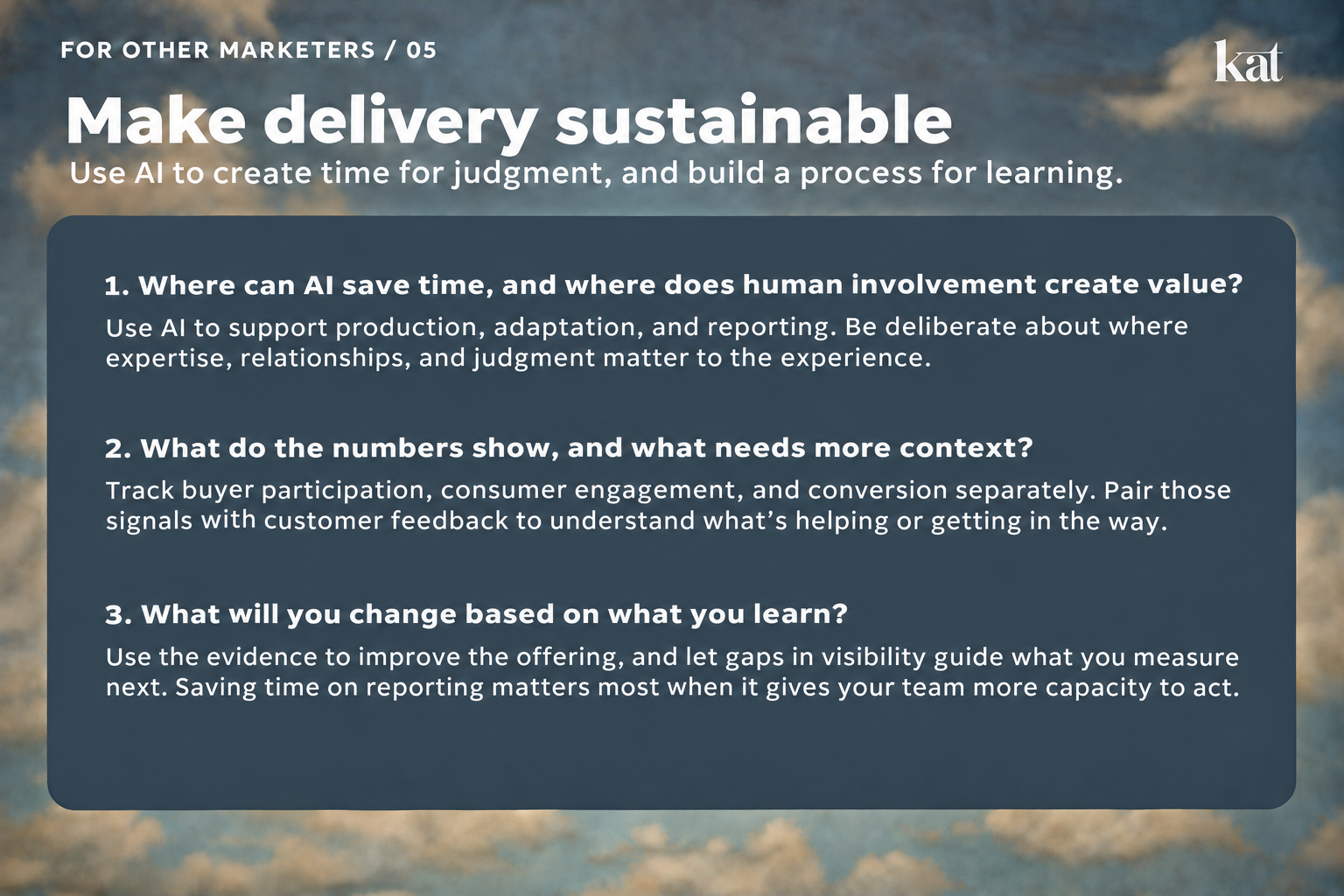
Next, I partnered with the internal data & analytics team to bring data from multiple tools into BigQuery, then built an automatically updating dashboard hosted in Netlify with Claude Code, using the Claude API to generate recurring analysis. This saved the team time pulling data and reconciling spreadsheets, giving us more time to interpret results and act on them.
One visibility gap remained: page visits didn’t tell us every time a customer distributed a resource.

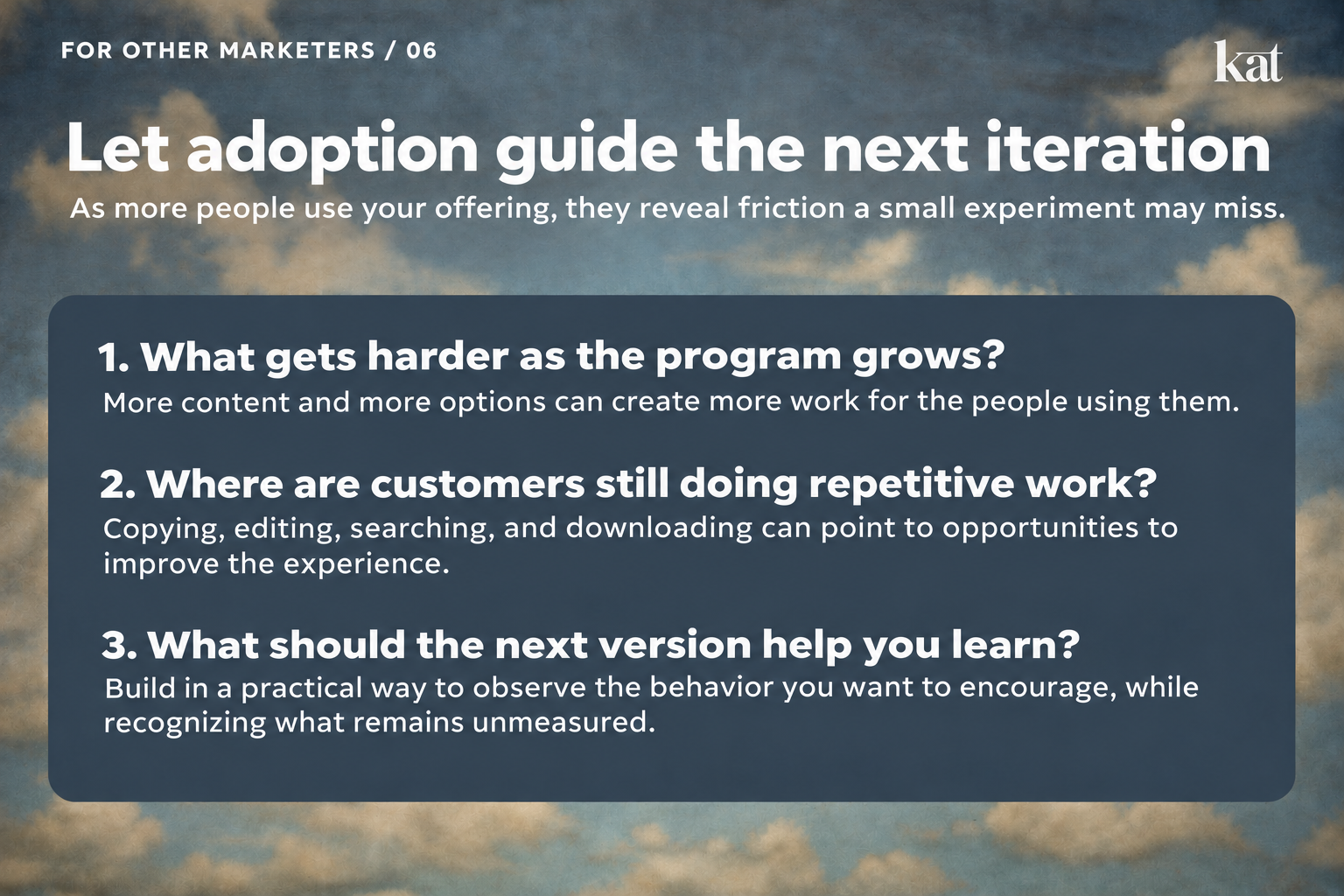
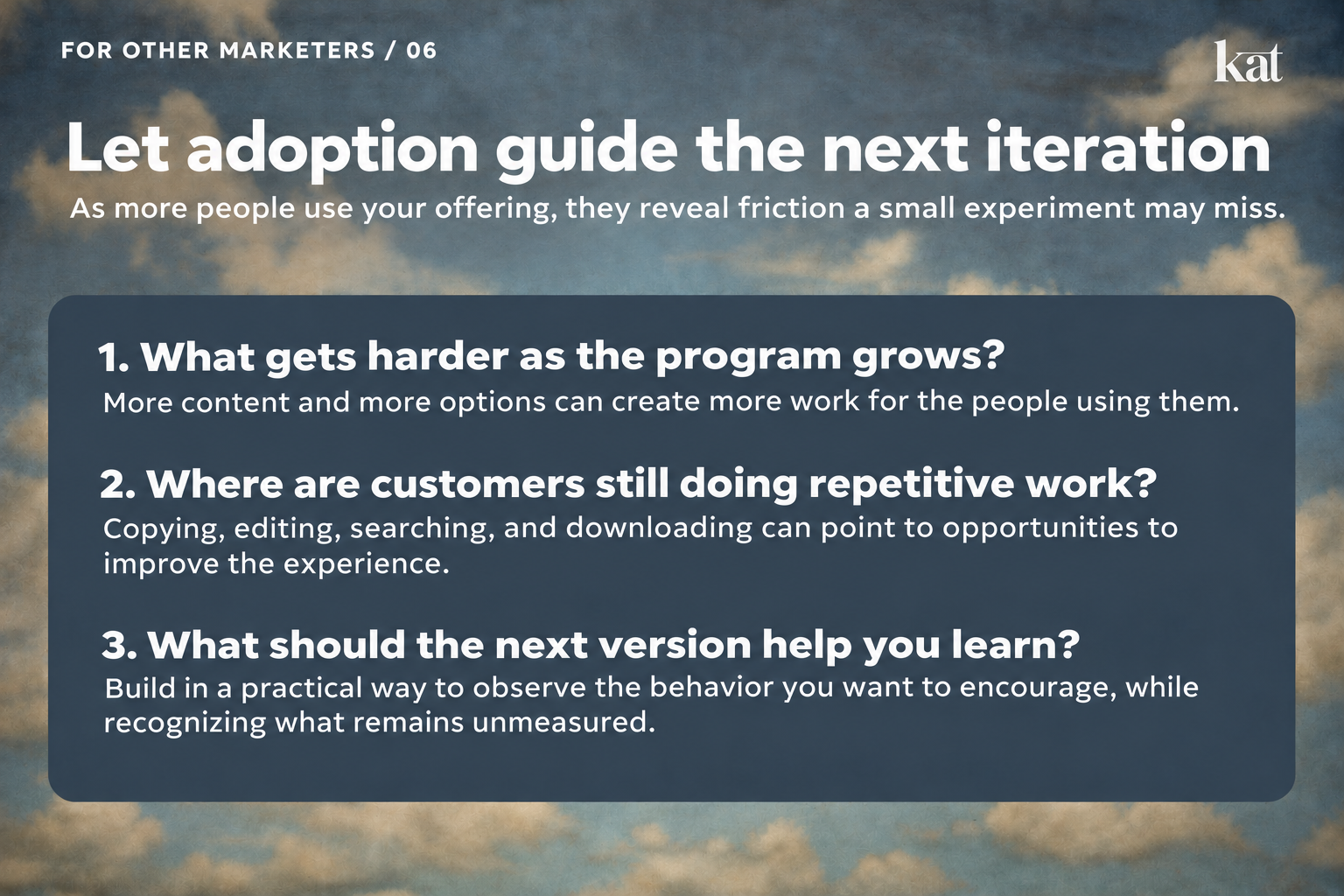
As the Notion library expanded, customers found it harder to navigate. One compared it to "searching overflowing racks at TJ Maxx". While the data showed the funnel was driving growth, qualitative feedback indicated that customers still had to find assets, copy messages, add their district name, and download files individually.
That feedback changed the next design question: how much of the work between deciding to share and actually sharing could the experience handle?
I designed and built a self-serve holiday outreach web app, using Claude for planning and content development and Claude Code for implementation.
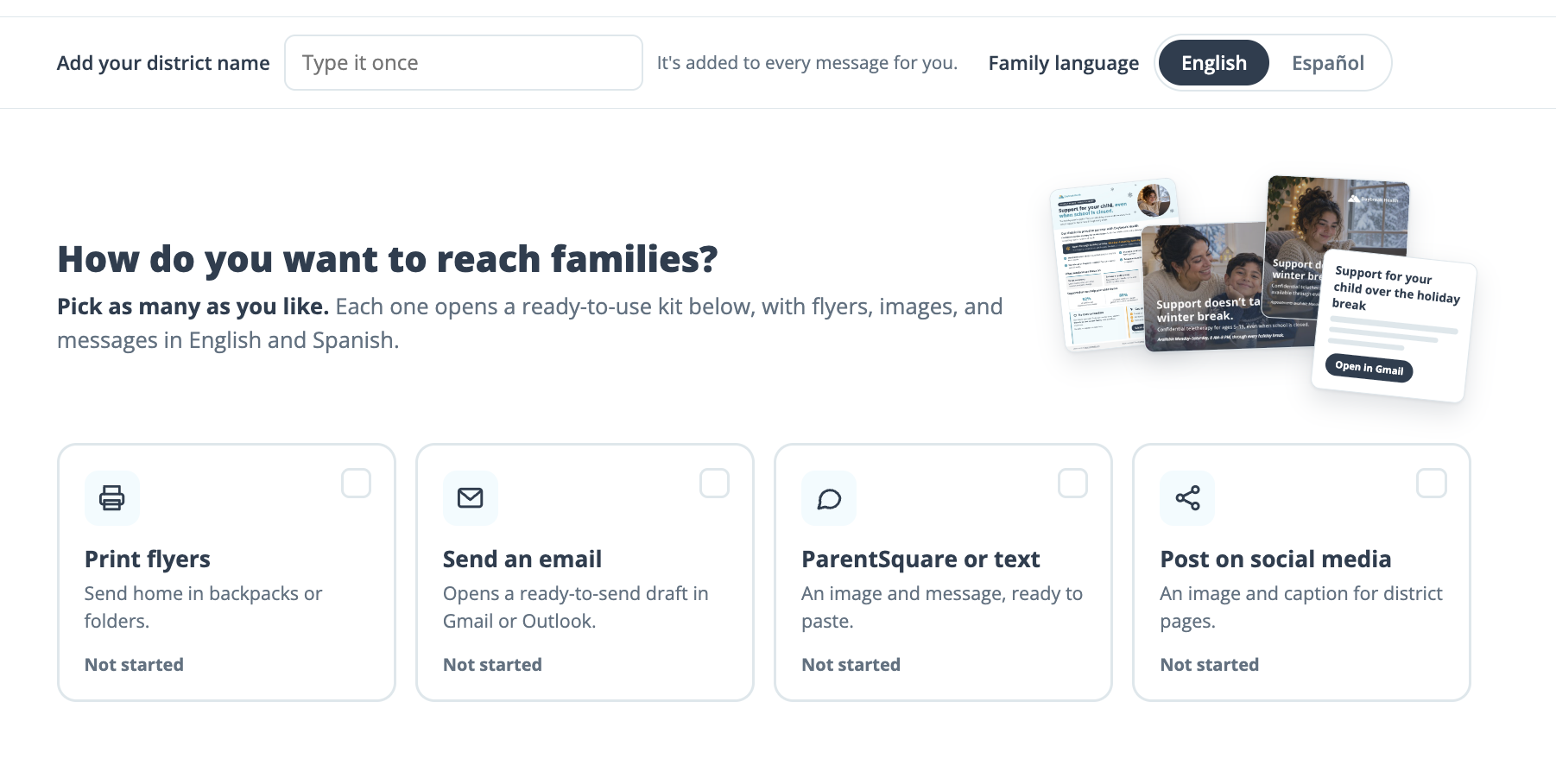
The interface starts with the customer’s intended action: email, text, ParentSquare, social media, or print. Staff enter their district name once, then open a prefilled email draft, copy a message, or download an asset. Contract-specific versions and an English/Spanish toggle carry the segmentation into the experience.
An optional “I’ve sent it” form captures self-reported outreach activity and stories, addressing part of the original measurement gap.

Peep the full app: https://toolkit.daybreakhealth.com/parent-education/unlimited/december-2026
Note: This version is built, but brand new; adoption and impact results are still to come. It tests whether reducing the work of distribution will help more customers participate.

The CEO’s response: “I like to be proved wrong.”

Download the free workbook and plan your next B2B2C experiment. 👇
One thing I’ve value, about building at Daybreak Health in addition to our awesome mission of supporting student mental health, is the room to get curious, test an idea, and take it further when the evidence supports it.
I had the trust to experiment and colleagues across senior leadership, Customer Success, User Growth, and Data & Analytics willing to work through it with me.
If that sounds like the kind of environment you’d enjoy, explore careers at Daybreak Health (link: https://www.daybreakhealth.com/careers)
Product Marketing Manager in Education
Donna set out to unify SKILLFRAME’s sales message and help reps overcome LMS-related objections. They interviewed stakeholders, reviewed sales and marketing materials, used AI to build a Clarity Framework, and created pe Read more
Product Marketing Manager in Technology & Software
Emmanuella set out to build PATCHWORK’s three-year go-to-market roadmap and investment case, combining segment analysis, positioning, pricing, financial modeling, and evidence-based funding gates to validate repeatable g Read more
Comments
Founder at Dusted
300%+ engagement growth!!! I'm so impressed! I think this is something I've heard a lot of enterprise tech companies say they are trying to do: "to meet customers where they are". And what you built is a clever approach on a classic strategy to do just that -> reach customers with the right message, at the right time, on the right channel. AND you gave us a worksheet to try this ourselves!! THANK YOU!!